Homeowner Resource
What To Do In The First 24 Hours After A Pipe Bursts
☎ (678) 940-0638
24/7 dispatch if you need help right now
A burst pipe is one of those events that tends to happen at the worst possible time: late at night, during a holiday, or right as you're walking out the door. What you do in the first hour or two afterward has a real impact on how much of your home ends up needing repair. So it's worth knowing the sequence before you're standing in an inch of water trying to remember it.
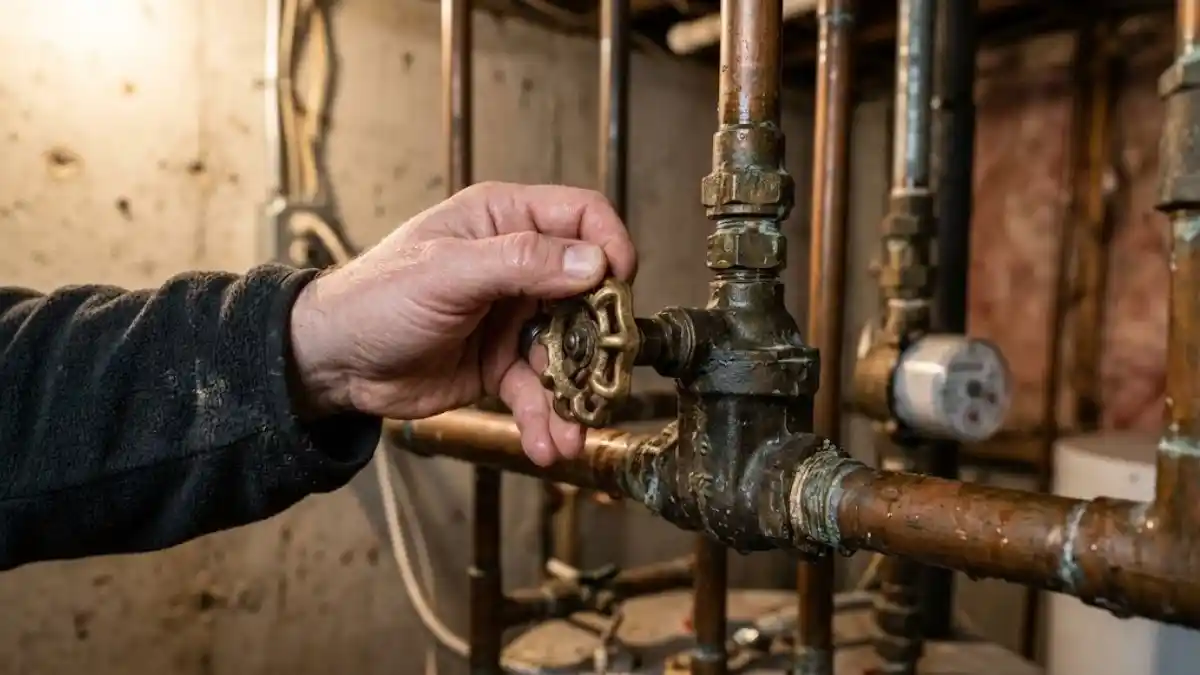
Find your home's main water shutoff valve and turn it off immediately. This is usually located where the water line enters the house, often in a basement, crawlspace, or utility closet, or near the water heater. If you don't already know where yours is, this is worth finding out before an emergency, not during one.
If water has reached an area with electrical outlets, appliances, or your electrical panel. You can safely do so, shut off power to that area at the breaker. If there's any doubt about safety, don't enter the water. Wait for a professional.
Take photos and, if you can, a short video of the damage as it stands before you move anything or start mopping up. This documentation matters more than people expect once an insurance claim is involved. An adjuster working from photos taken in the moment has a much clearer picture than one working from your memory of what things looked like days later.
Move furniture, rugs, and valuables out of the affected area if it's safe to do so. The faster items are out of standing water, the better their odds of being salvageable.
Once the water is off and the immediate safety concerns are handled, the next call should be to a restoration crew, not a general contractor. Standing water needs extraction and moisture-mapping quickly. Materials that sit wet for more than 24 to 48 hours are a lot more likely to need full replacement instead of drying and repair.
Our burst pipe repair team handles the water damage side of this from the moment we arrive. We coordinate with a licensed plumber for the actual pipe repair itself. Combined with our water extraction service for larger events, the goal is always to limit how much of your home needs full replacement versus simple drying.
Georgia's humid subtropical summers make the 24-to-48-hour window mentioned above even tighter in practice. Higher ambient humidity means materials that are already wet from a burst pipe take longer to dry naturally between the event and when professional equipment arrives. This gives mold a head start it wouldn't have in a drier season. This is part of why we treat every burst pipe call with the same urgency regardless of time of day or day of the week. This is because the clock on material damage starts the moment the pipe fails, not when a crew arrives.
Homes throughout Peachtree City and our wider service area see this pattern most during the peak of summer, when both temperature and humidity are highest, making fast response the single biggest factor in how much of a home ends up needing full replacement versus simple drying.
This kind of emergency doesn't wait for business hours, which is why our dispatch line covers Peachtree City and the surrounding area 24 hours a day, every day of the year.