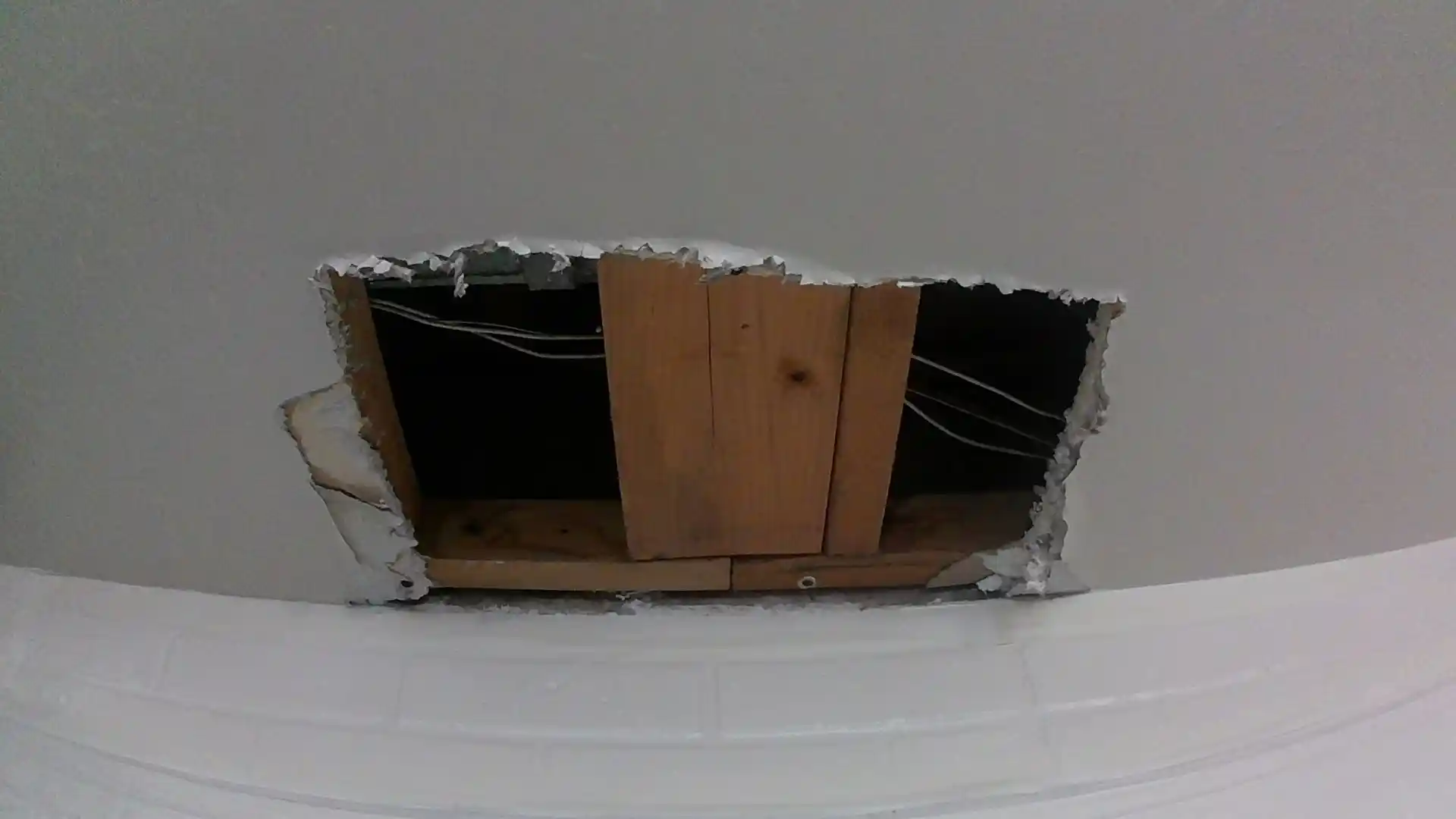
Repair for soft spots, stains, and sagging drywall caused by leaks from an upstairs bathroom or plumbing line.
One of the most common calls we get starts the same way: a soft spot forming on a ceiling, usually below an upstairs bathroom. By the time that spot is visible and soft to the touch, water has usually been getting past the toilet wax ring, a shower pan, or a supply line for some time: the ceiling doesn't sag until drywall has already absorbed a meaningful amount of moisture.
Ignoring a soft spot doesn't make it go away. Left alone, it eventually leads to a full ceiling collapse in that section, along with mold risk in the insulation and framing that sat wet the whole time. Catching it at the soft-spot stage is a much smaller repair than catching it after a collapse.
Our repair process starts by confirming the leak source is stopped, not just cutting into the ceiling, since repairing drywall over an active leak just delays the same problem.
Verifying the leak is stopped before any drywall work begins.
Cutting out saturated drywall and insulation rather than patching over hidden moisture.
Rebuilding the ceiling section and matching texture and paint to the surrounding area.
A soft-spot repair can stay small or expand once we open the ceiling. So we confirm scope with a written, itemized assessment rather than pricing off a phone description.
Once a ceiling section is opened, we're not just looking at the immediate leak source. We check surrounding framing for any softness or discoloration that would indicate the leak has been active longer than the visible stain suggests. We check insulation directly above the affected area, since wet insulation loses most of its effectiveness even after it dries and often needs replacing rather than just drying in place. In two-story homes common throughout Peachtree City's newer villages like Kedron and Wilksmoor, we also check whether the leak has affected the subfloor of the room above, since ceiling damage downstairs and flooring damage upstairs are often the same event viewed from two different rooms.
Only once that fuller picture is confirmed do we move to actual drywall repair. This keeps us from closing up a ceiling over a problem that's still developing.
Most often it's a slow leak from an upstairs bathroom — a toilet wax ring, shower pan, or supply line — that's been letting water into the ceiling drywall for some time before it became visible.
Yes, if the leak source is still active. We'll confirm this during our assessment and can coordinate with a plumber if the source hasn't been addressed yet.
It's better to leave that to us. Draining it incorrectly can cause a larger, uncontrolled collapse. It doesn't address what's soaking the insulation above.
Yes, especially if the leak has been ongoing for more than a couple of days. We check for that during the repair and can coordinate mold remediation if needed.