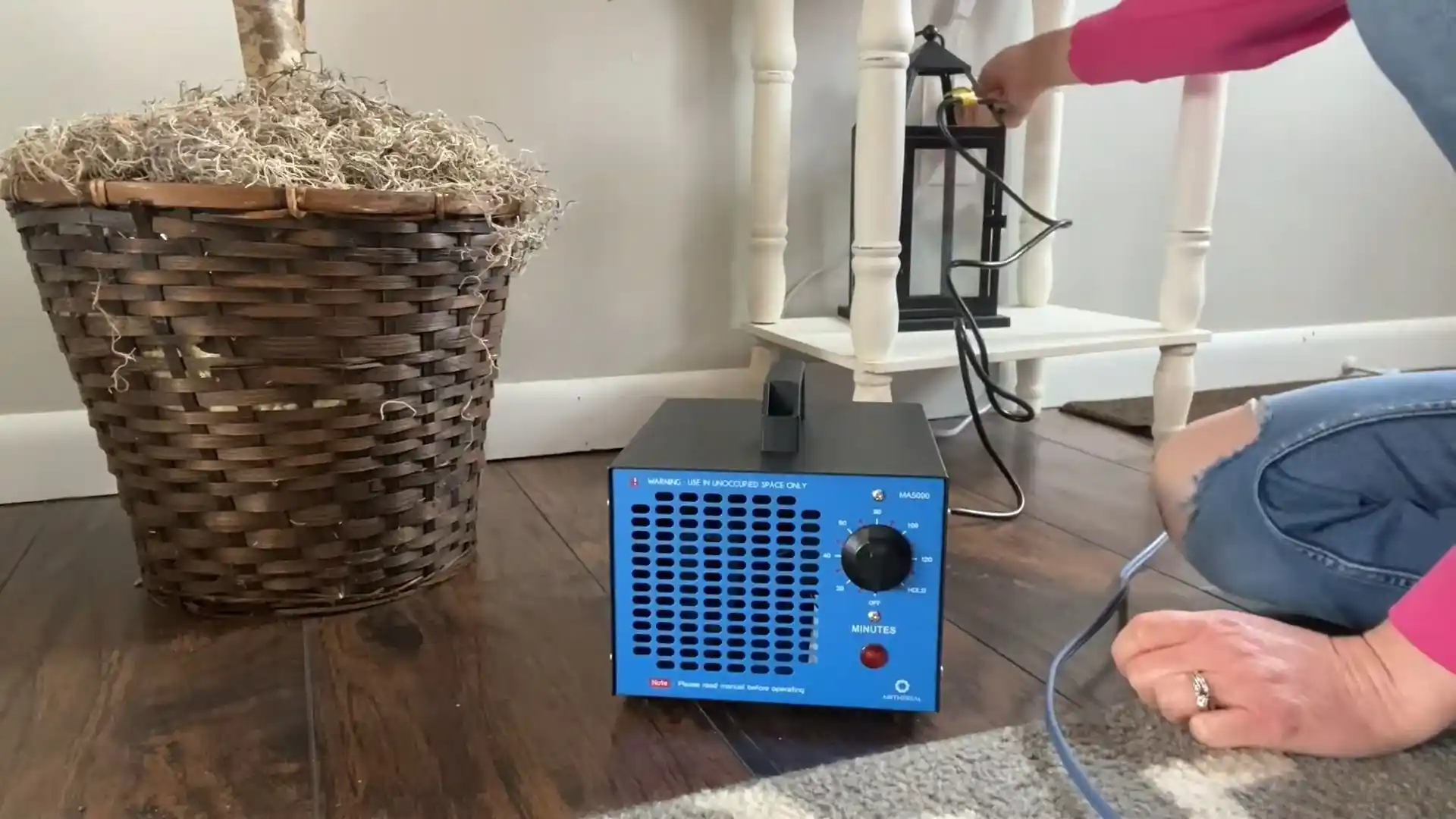
Ozone treatment, thermal fogging, and sealant application to fully eliminate smoke odor rather than just masking it.
Smoke odor comes from microscopic particles embedded in porous materials: drywall, insulation, fabric, even wood framing. Air fresheners and standard cleaning only mask that smell temporarily. The odor tends to return, often stronger, once humidity or heat causes those particles to off-gas again.
Real odor removal requires reaching those particles directly. Thermal fogging uses a heated fog that penetrates into the same crevices and pores that smoke originally reached, neutralizing odor at the source. Ozone treatment works differently, using ozone gas to break down odor-causing molecules throughout a sealed space.
Heated fog that reaches the same crevices smoke penetrated, neutralizing odor at the source.
Ozone gas application in a sealed, unoccupied space to break down odor molecules.
A sealing step before repainting so treated surfaces don't allow odor to resurface.
Odor treatment cost depends on how deep smoke penetrated, which we confirm with a written, itemized assessment before starting any ozone or fogging work.
Smoke odor molecules bind more readily to surfaces in humid conditions, which means homes in our climate can actually see odor intensify in the weeks after a fire rather than fade on their own, especially during Peachtree City's long, humid summers. A closed-up house with the air conditioning running actually traps that odor rather than dispersing it, since AC systems recirculate indoor air rather than pulling in fresh air from outside.
This is one reason we don't recommend waiting to see if a smoke smell fades naturally before scheduling treatment. The longer it sits in our climate, the more embedded it becomes in soft materials like carpet, drapery, and upholstered furniture throughout the home.
Ozone treatment is performed in a sealed, unoccupied space, and the area is fully ventilated and cleared before anyone re-enters. We handle the timing and safety protocol as part of the service.
Standard cleaning often addresses surface residue without reaching the particles embedded deeper in porous materials. This is why the odor can resurface, especially in warm or humid conditions.
A single-room thermal fogging treatment usually takes a few hours, while a whole-home ozone treatment usually requires the home to be vacated for a full day.