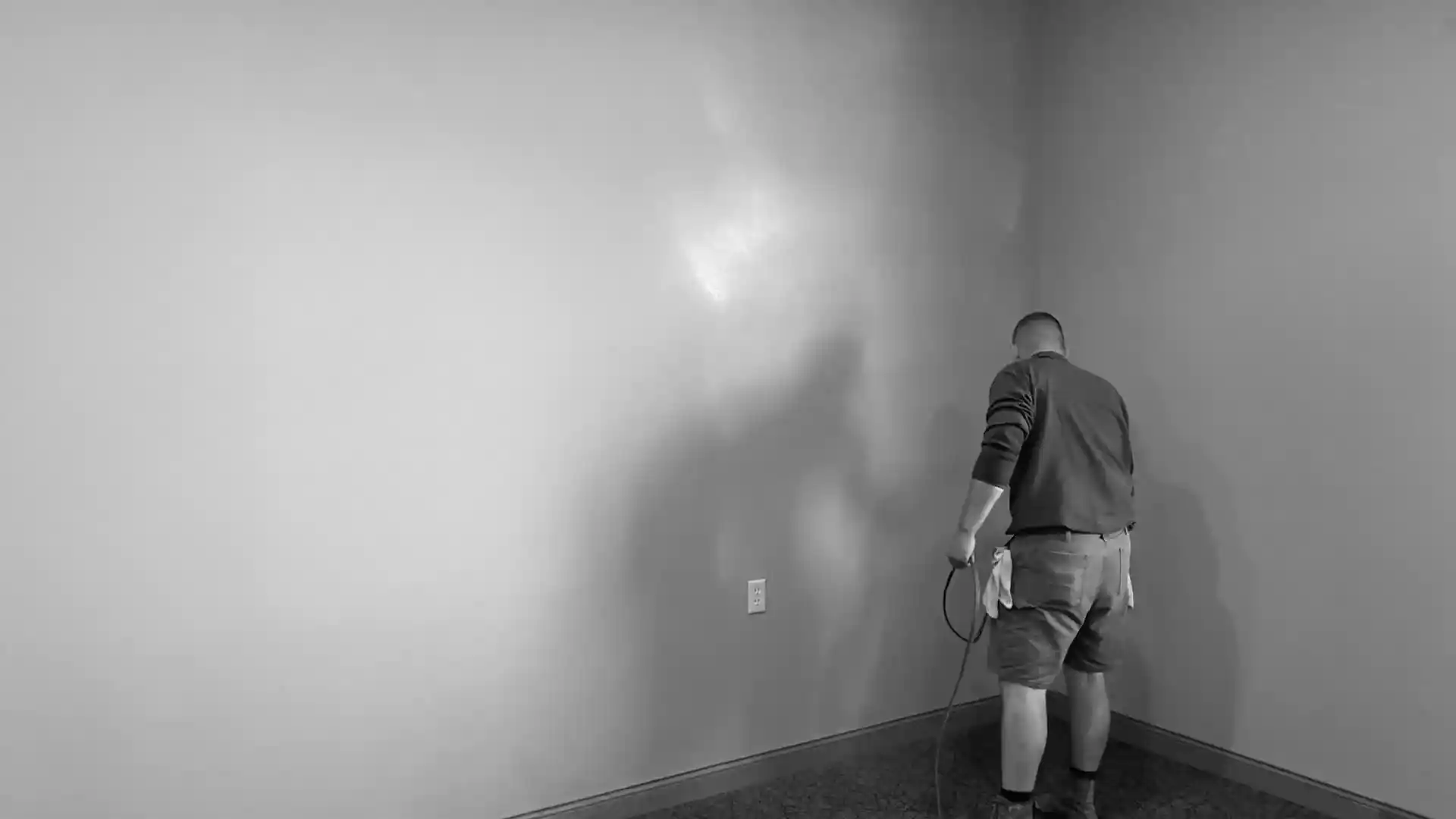
Specialized cleaning to lift acidic soot residue from walls, fixtures, and belongings before it permanently stains surfaces.
Soot is acidic, and the longer it sits on a surface, the harder it is to remove without leaving a permanent stain or discoloration behind. What starts as a wipeable film on day one can etch into paint, metal, and grout within a matter of days, especially in Georgia's summer humidity, which accelerates the chemical reaction.
Different soot types also respond to different cleaning methods: dry soot from a fast-burning fire needs different handling than the oily, wet soot typical of a smoldering fire or a puffback event. Using the wrong method can smear soot deeper into a surface instead of lifting it off.
Dry-sponge and chemical cleaning matched to the soot type and surface material.
Specialized cleaning to lift soot from upholstery without driving it deeper into fibers.
Treatment to prevent soot's acidic residue from corroding hardware and fixtures.
Soot type and surface material both affect cost, which is why we confirm pricing with a written, itemized assessment rather than a flat number.
Soot's acidic properties do more damage the longer they sit, and our humid subtropical climate accelerates that timeline compared to a drier region. Moisture in the air reacts with soot residue to make it more corrosive. This is part of why a soot cleanup job that starts within a day or two of a fire has meaningfully better odds of fully restoring a surface than one that sits for a week, even in summer when homes are air-conditioned and feel dry inside.
Homes near Lake Peachtree and Lake McIntosh, where ambient humidity tends to run higher than inland parts of the city, see this pattern most clearly. We factor local humidity conditions into how urgently we recommend starting cleanup after a fire, not just the size of the affected area.
It's better to leave it alone if possible. Dry-wiping soot often smears it deeper into painted surfaces and fabric rather than lifting it off cleanly.
It's a real risk. Soot's acidic residue etches into surfaces the longer it sits, especially in humid conditions, so faster cleanup gives a better chance of full restoration.
Soot cleanup addresses the visible residue. Odor often needs a separate treatment step, like ozone or thermal fogging, for complete removal.