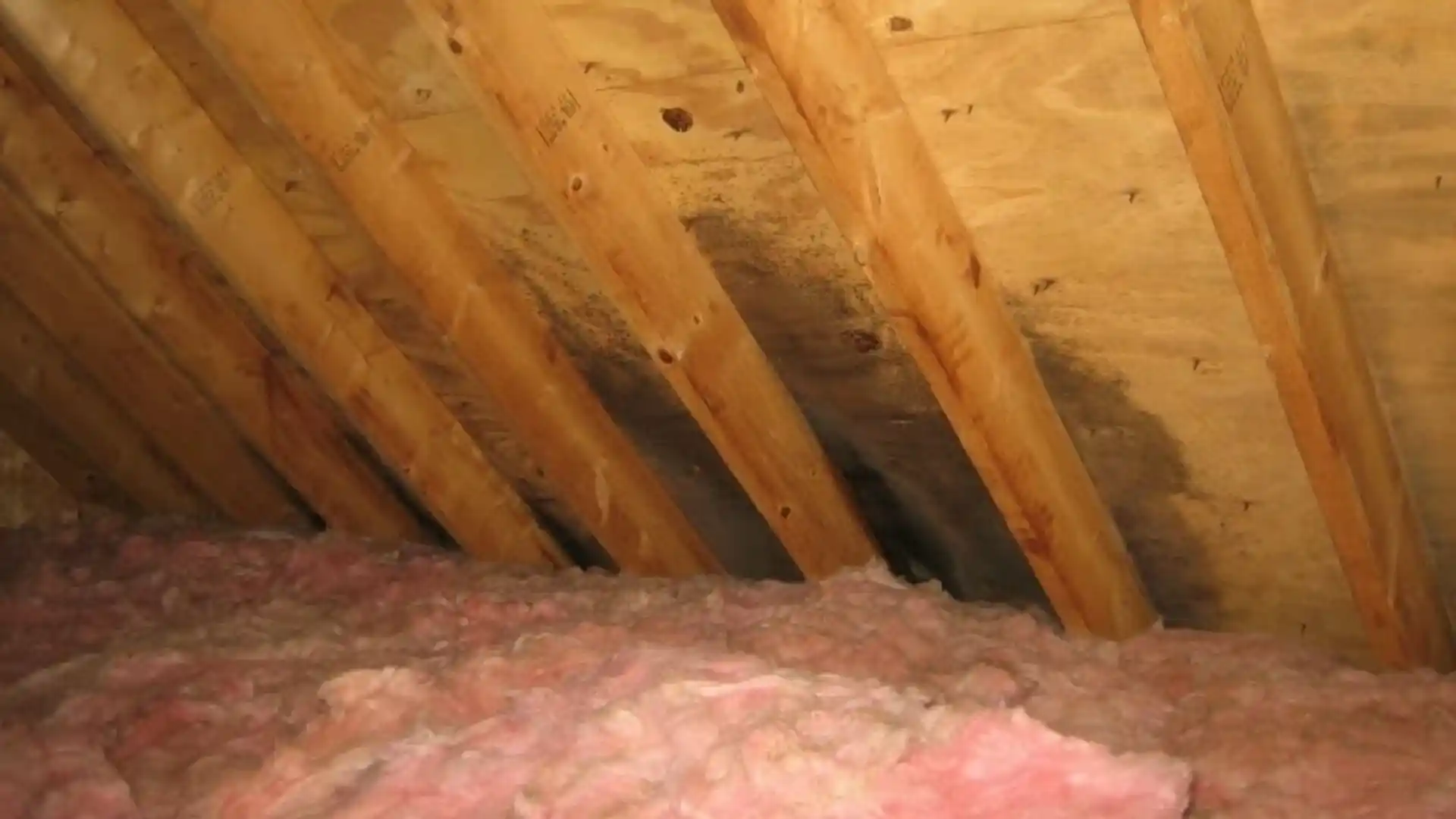
Removal for roof-leak or poor-ventilation mold growth in attic spaces, one of the most common mold locations in the region.
Attics are one of the least-visited parts of a home, which means mold growth there can go unnoticed for a long time, often until a musty smell reaches the living space below, or until a home inspection during a sale turns it up. Two causes account for most of what we see: a roof leak that's been letting water into the insulation, and simple poor ventilation that lets summer humidity build up under the roofline.
Georgia's humid subtropical summers push attic temperatures and humidity higher than many parts of the country. This makes ventilation quality a bigger factor here than it would be in a drier climate. An attic with restricted airflow can develop mold even without any leak at all.
Determining whether the cause is a leak, ventilation, or both before remediation.
Removing affected insulation and treating exposed framing and decking.
Flagging airflow improvements that reduce the odds of recurrence.
Attic mold cost depends heavily on how far it's spread through insulation and framing, which we confirm with a written, itemized assessment before removal starts.
Proper attic ventilation depends on air moving in through soffit vents at the eaves and out through ridge or gable vents at the top, creating continuous airflow that keeps summer heat and humidity from building up under the roof deck. When soffit vents get blocked, often by insulation pushed too far during a past upgrade, that airflow stops working even if the ridge vent itself looks fine from the ground.
We see this pattern often in homes built during Peachtree City's earlier development decades, where attic insulation has sometimes been added or replaced without re-checking that the original vent baffles are still clear. Part of our attic mold assessment includes checking this balance, since removing mold without addressing a blocked vent just sets up the same growth to return within a season or two.
A musty smell noticeable from the living space below, especially near the top floor, is the most common sign. Some homeowners also learn about it during a home inspection.
Not always. Poor ventilation alone can cause it, especially during humid summer months, even with no leak present at all.
We handle the mold remediation itself and can coordinate with a roofer for the actual leak repair, since roofing work falls outside our restoration scope.