Visual inspection to locate hidden mold growth and identify its moisture source, whether or not testing is also needed.
A mold inspection is a visual, hands-on assessment of a property to locate growth, identify likely moisture sources, and determine whether testing is warranted. It's distinct from testing itself: an inspection is what a trained technician sees and checks in person, while testing involves lab-analyzed samples for species and spore-count confirmation.
Our inspections go beyond just looking at visible surfaces. We check common trouble spots specific to Peachtree City homes: crawlspaces and basements in older Aberdeen and Braelinn construction, bathroom exhaust venting, and areas near known plumbing runs. This is because a thorough inspection catches problems that a quick walkthrough would miss.
Examining visible surfaces throughout the property for signs of mold.
Identifying the likely cause behind any growth found, not just the growth itself.
A documented summary of findings, useful for a home sale, insurance, or planning remediation.
Inspection scope can grow if we find signs pointing to a larger issue, so final cost is always confirmed in writing before any additional work is proposed.
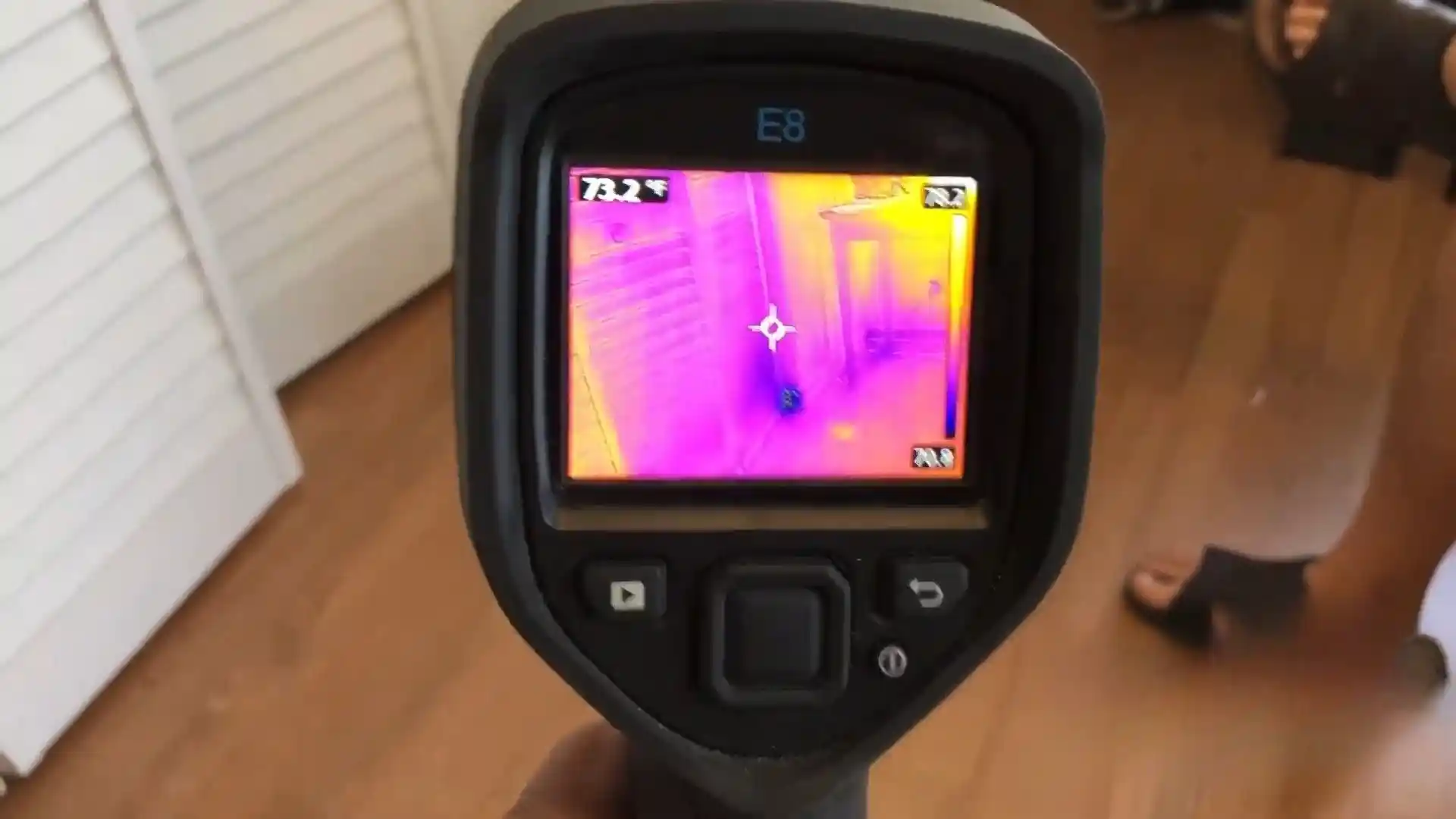
Beyond a visual walkthrough, we use thermal imaging cameras during inspections to spot temperature differences in walls and ceilings that often indicate moisture hiding behind a finished surface, well before any visible staining or odor develops. A cooler patch on a wall that should be uniform in temperature is a strong signal worth investigating further, especially in homes near Lake Peachtree and Lake McIntosh where humidity-driven moisture problems are more common.
This tool is particularly useful in older Peachtree City homes with finished basements or additions, where the original construction may have sealed in a moisture source that wouldn't be visible from either side of the wall without specialized equipment.
Not always. If the inspection finds clearly visible mold with an obvious cause, testing may not add much. It's more valuable when there's a smell without visible growth or when species confirmation matters.
Yes, a pre-purchase mold inspection is common and can flag issues worth negotiating on or addressing before closing.
Crawlspaces, the back of closets against exterior walls, behind bathroom exhaust fans, and areas around known past leaks are the spots we find get missed most often in a casual homeowner walkthrough.