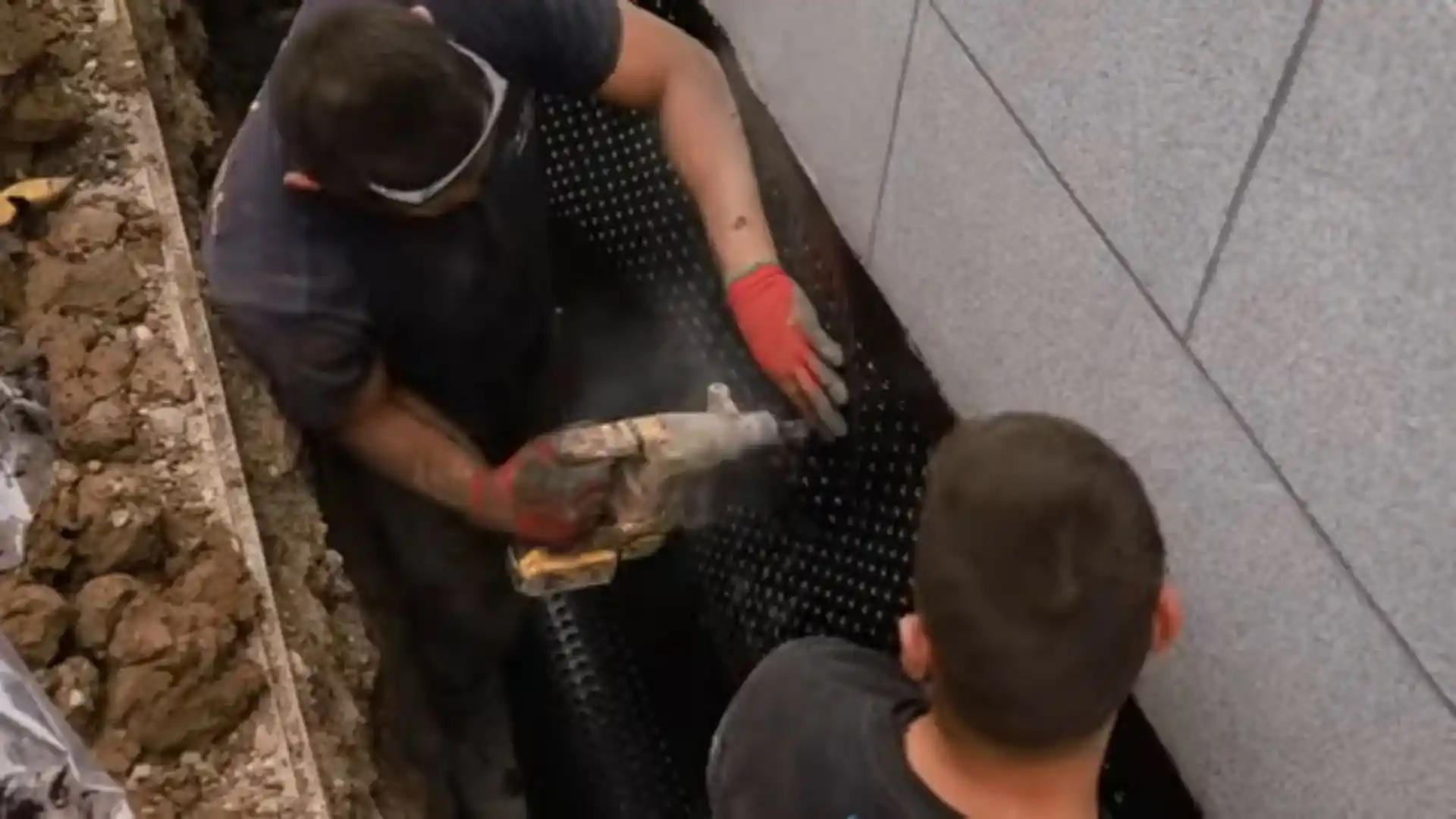
Extraction for basement water intrusion tied to groundwater, foundation cracks, or a failed waterproofing system.
Not every basement water problem starts with a flood or a burst pipe. A lot of what we see is slower groundwater intrusion: water seeping through hairline foundation cracks or a cove joint where the wall meets the slab, gradually building up after days of saturated soil rather than arriving all at once.
This kind of intrusion is easy to underestimate because it often looks minor at first: a damp patch along a wall, a bit of standing water in a corner. But it tends to recur every time the soil around the foundation gets saturated again. This means removal alone doesn't solve the underlying cause the way it would for a one-time event.
Our approach separates the two questions clearly: how do we remove the water you have right now, and what's actually driving it so you know what to expect going forward.
Water pushing through the joint where the basement wall meets the floor slab.
Small cracks that let water through under hydrostatic pressure after heavy rain.
A clogged or poorly sealed window well collecting and channeling water inside.
Basement water removal costs shift with how far groundwater has traveled and how much material needs replacing. So we confirm the real number with a written, itemized assessment before any work starts.
Once water is removed, homeowners often ask whether an interior drainage system, like a French drain and sump pump installed along the inside of the basement wall, or an exterior fix, like the kind of excavation and membrane work that addresses the problem from outside the foundation, makes more sense. Interior systems are typically faster and less disruptive to landscaping. This matters for homes with mature yards in established neighborhoods like Braelinn. Exterior systems address the water before it reaches the foundation at all, which can be the better long-term fix for homes with a documented history of recurring seepage.
We don't install drainage systems ourselves, but our assessment includes flagging which approach the entry pattern suggests. So you have that information whether you're getting quotes from a waterproofing contractor or just deciding whether the issue is worth addressing beyond our removal service.
If the cause is ongoing groundwater intrusion, yes, it's likely to recur after the next heavy rain unless the entry point is addressed separately. We'll flag what we see so you know whether that's worth pursuing.
Usually not under a standard homeowner's policy, since it's considered a maintenance or grading issue rather than a sudden event. We can still help document the situation clearly either way.
A flooded basement usually involves a larger volume of water from a specific event. Groundwater intrusion is often slower and recurring, tied to soil saturation rather than a single storm.