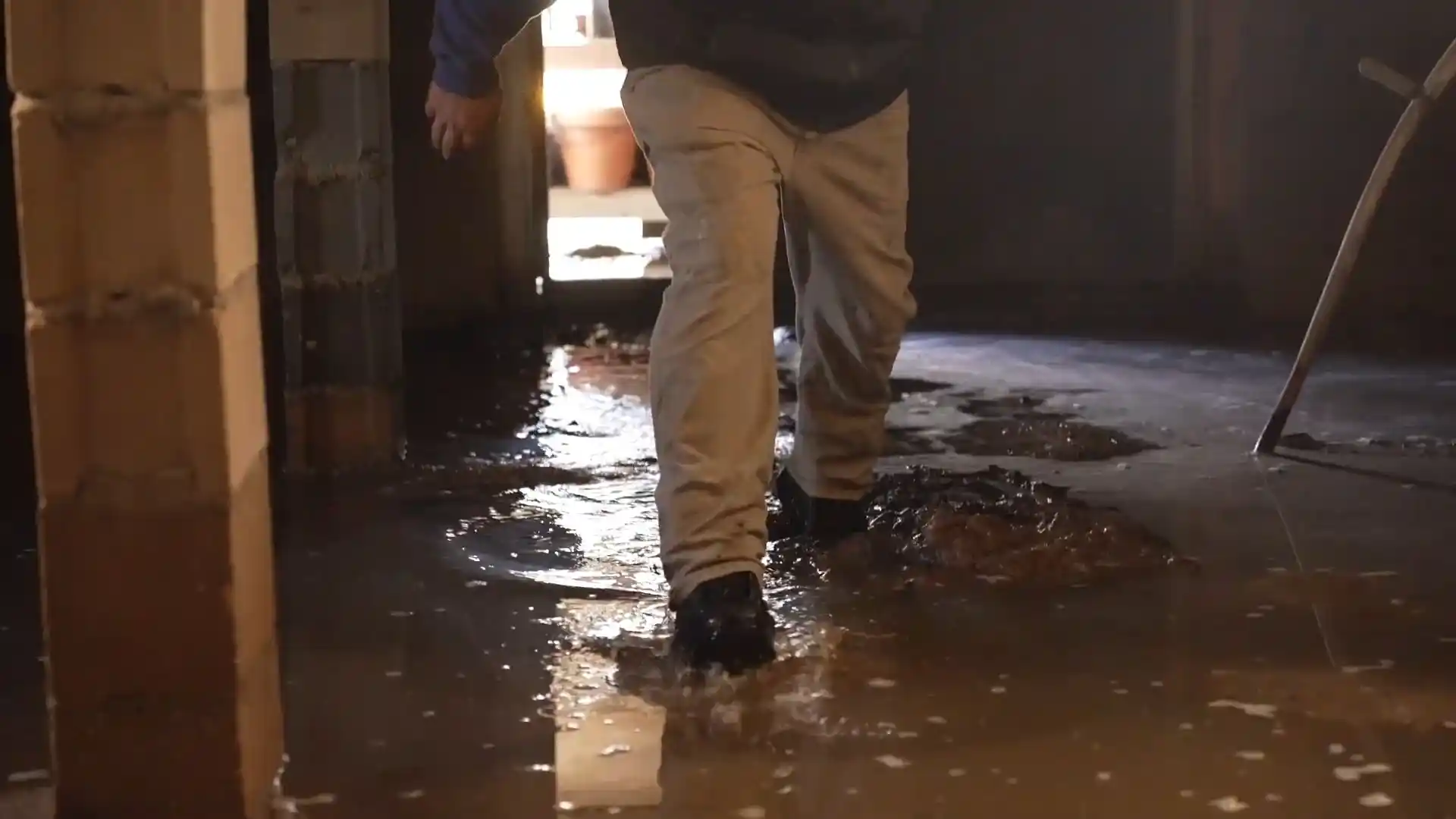
Extraction and drying for flooded basements, whether the cause is a sump pump failure, heavy rain, or a plumbing issue.
Basements flood differently than upper floors, and the cleanup has to account for that. Water often enters gradually through a foundation crack, a failed sump pump, or a window well rather than all at once. This means by the time it's noticed, it may have already been sitting long enough to soak into stored items, drywall, and any finished flooring.
Basements also sit below grade, which means drying takes longer than an equivalent space upstairs. There's less natural airflow. The surrounding soil keeps pushing ambient humidity back into the space even after standing water is gone. We factor extra drying time into basement jobs for exactly this reason.
If your basement is finished, cleanup often means pulling baseboards and the bottom section of drywall to dry the wall cavity properly, rather than just drying the visible surface, skipping that step is one of the most common reasons a "dried" basement develops mold weeks later.
Power outages or pump failure during heavy rain are one of the most common basement flood causes.
Hydrostatic pressure from saturated soil pushing water through small foundation cracks.
Prolonged rain events that overwhelm yard drainage and grading around the foundation.
A number of homes in Peachtree City's older sections, particularly around Aberdeen and Braelinn, have basements or crawlspaces built to 1960s through 1980s standards, before modern foundation waterproofing and sump systems were standard practice. These basements are more prone to slow water intrusion during sustained rain events than newer construction elsewhere in the city.
Finished versus unfinished basements carry very different price tags, so the number you get is always backed by a written, itemized assessment first.
A sump pump that ran during a flood event isn't automatically off the hook. We check discharge line routing to confirm water is actually being pushed far enough from the foundation to not just re-enter through the same path. We check battery backup status for homes that lost power during the storm that caused the flooding in the first place. This is because a pump without power does nothing no matter how well-maintained it is. Peachtree City's summer storms sometimes bring power outages alongside heavy rain, and a sump pump without battery backup is one of the most preventable causes of repeat basement flooding we see.
We flag this during every basement cleanup, whether or not pump failure was the actual cause this time. This is because it's a cheap fix compared to the cost of another cleanup.
Once cleanup is complete, we can flag any contributing factors we noticed on-site: a sump pump nearing the end of its lifespan, grading that slopes toward the foundation instead of away from it, or a foundation crack that's likely to let water back in during the next heavy rain. Addressing those is outside our restoration scope, but knowing about them ahead of the next storm is worth having.
It depends on your policy. Sump pump failure is sometimes covered under a specific endorsement rather than a standard policy. So it's worth checking your coverage. We document the cause either way. This helps no matter how the claim is classified.
Most basements need four to seven days of active drying, longer than an equivalent space upstairs, due to below-grade humidity and limited natural airflow.
Often yes, at least the lower section. Drywall wicks moisture upward. A wall that looks dry at eye level can still be holding water near the base.
It depends on material and how long they were in standing water. Non-porous items usually clean up fine. Cardboard, paper, and fabric items are more often a loss once soaked.