Homeowner Resource
After A House Fire: What's Actually Salvageable?
☎ (678) 940-0638
24/7 dispatch if you need help right now
In the immediate aftermath of a house fire, it's easy to assume everything touched by smoke or soot is a total loss. The reality is more nuanced: a lot depends on material type, how close it was to the fire itself, and how quickly proper cleaning begins. Here's a realistic breakdown of what usually can and can't be saved.
Framing, drywall, and flooring that were directly burned obviously need replacement. But materials that were only exposed to smoke and soot without direct flame contact often can be cleaned and restored rather than replaced, provided the cleaning happens with the right specialized products rather than standard household cleaners. This can smear acidic soot deeper into a surface instead of lifting it off.
Curtains, upholstered furniture, and clothing can often be professionally cleaned and deodorized if the fabric itself wasn't burned, though this depends heavily on how much smoke exposure occurred and for how long. Items closer to the fire's origin point are less likely to be salvageable than items in rooms further away that only picked up smoke odor.
This one surprises people. Electronics exposed to smoke, and even some water from firefighting efforts, can sometimes be professionally cleaned and restored, particularly if they're assessed and cleaned before corrosive soot residue has time to damage internal components. Waiting too long reduces the odds a lot, since soot's acidic properties continue degrading circuit boards and connections the longer they sit untreated.
Paper items are among the most fragile in a fire, but specialized document restoration can sometimes recover items that look like a total loss, including water-damaged and smoke-affected photos and paperwork. It's worth asking about this rather than assuming everything paper-based is gone for good.
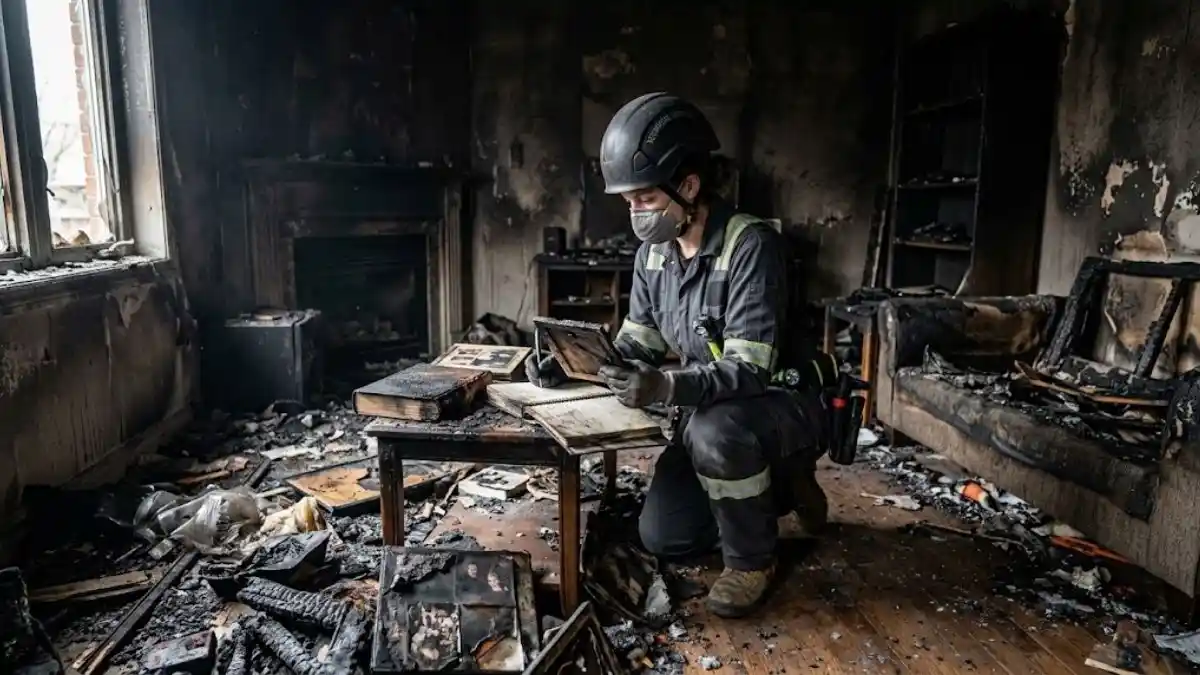
The line between salvageable and total loss isn't always obvious just by looking. A professional assessment sorts items into salvageable, restorable-with-treatment, and total-loss categories. This matters both for what you actually get to keep and for documenting your insurance claim accurately.
Our smoke damage restoration team handles the structural and surface side of this assessment, and for items with heavier soot exposure, our soot cleanup service uses the specialized cleaning methods that give borderline items their best chance at being saved rather than discarded automatically.
We walk homeowners across Peachtree City and our full service area through this same sorting process after every fire call. It's almost always more encouraging than people expect once someone experienced actually looks at what's there.
Smoke and soot residue keep chemically degrading whatever they've settled on. That process doesn't pause while you're deciding what to do next. Electronics that could have been professionally cleaned within the first few days sometimes become unsalvageable a week later, once corrosive residue has had time to work into circuit boards and connections. The same is true for photographs and documents, where acidic soot can permanently damage paper fibers the longer it sits untreated.
This is part of why we recommend starting an assessment as soon as it's safe to re-enter a property, even before you've decided on a full restoration plan. This is because the salvage window for some items is measured in days, not weeks.