Homeowner Resource
Do Peachtree City's Golf Cart Path Tunnels Really Flood?
☎ (678) 940-0638
24/7 dispatch if you need help right now
If you've lived in Peachtree City for any length of time, you already know the golf cart path system isn't a novelty. It's genuinely how a lot of daily life here works. Over 10,000 households in the city own a golf cart. The network connecting neighborhoods, schools, and shopping centers stretches more than 100 miles. What's less talked about is what happens to some of those paths during a heavy rain event, particularly the tunnels and underpasses that route beneath roads at a few points across the city.
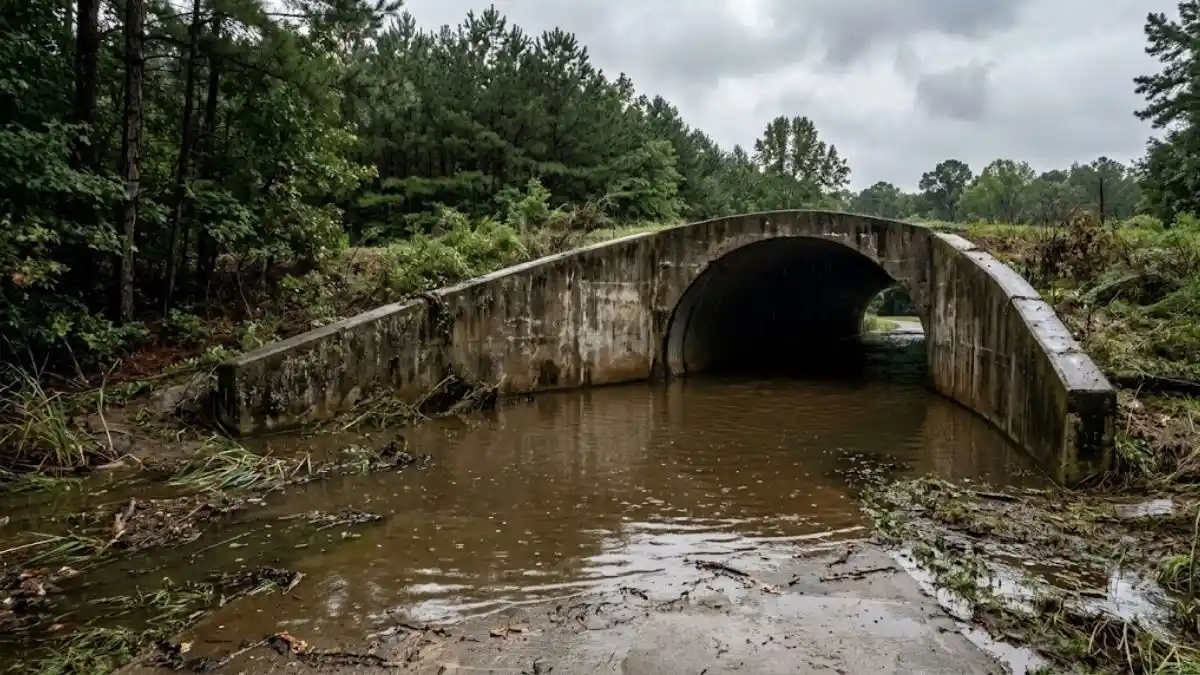
These low-lying sections are a documented spot where water can collect quickly during sustained downpours, sometimes closing a route until it drains. It's a real, physical pattern tied to the way the path system was built, not a rumor or an exaggeration.
To be clear: a flooded golf cart tunnel doesn't mean your house is about to flood. They're separate systems. But the pattern is worth paying attention to if you live near one of these low-lying corridors, because it often reflects something about the surrounding grade and drainage that your property may share, even if your home itself sits at a slightly higher point.
Georgia's red clay soil, common across the region, drains more slowly than sandier soils found elsewhere in the country. When a path tunnel floods after a storm, it's frequently because water that would otherwise soak into the ground faster is instead sitting on the surface longer than it would in a different soil type. That same slow-draining characteristic is exactly what can contribute to standing water pooling against a foundation, a slow-draining yard, or a crawlspace that stays damp longer than it should after a storm passes.
None of these are emergencies on their own, but together they're worth a closer look, especially if you live near one of the path system's known low points in areas like Aberdeen or Glenloch, where several path segments run close to residential lots.
If you're seeing actual water intrusion into your home — not just a damp yard, but water reaching a basement, crawlspace, or ground-floor room — that's a different situation than the path system's drainage pattern. It's worth a documented assessment rather than waiting to see if it happens again. Our flood damage restoration team can assess whether what you're seeing is a one-time event or a recurring drainage issue worth addressing before the next storm season.
This kind of localized flooding risk isn't unique to homes directly on the path system. We see similar drainage-related water damage calls throughout our Peachtree City service area and in neighboring communities like Tyrone, where lower-density properties often have their own grading quirks worth knowing about before the next big storm rolls through.
Georgia's 1974 legislation legalizing golf carts on city streets was written specifically because of Peachtree City's path system. That history matters more than trivia here. A city built this deliberately around a dedicated cart infrastructure, rather than retrofitting sidewalks or bike lanes onto an existing street grid, made specific drainage decisions during that original 1960s development that don't always match what a homeowner would expect from a typical suburban subdivision built the standard way.
That's part of why generic drainage advice from outside the area sometimes falls short here. A contractor unfamiliar with how the path system's grading interacts with residential lots nearby might miss a drainage pattern that's actually well documented if you know to look for it.
Sourcing note: this post draws on publicly documented information about the city's path system and general Georgia soil drainage characteristics. We were not able to pull real-time local forum discussion for this specific topic during this research pass, so specifics here are grounded in verifiable public sources rather than crowd-sourced anecdotes.