Homeowner Resource
Signs You Have Water Damage Under Your Laminate Or Hardwood Floor
☎ (678) 940-0638
24/7 dispatch if you need help right now
Flooring is one of the trickiest places to spot water damage early, because the surface layer often looks completely fine while moisture is already working its way through the subfloor underneath. By the time damage becomes visually obvious: cupping, buckling, or discoloration, the water has usually been there for a while.
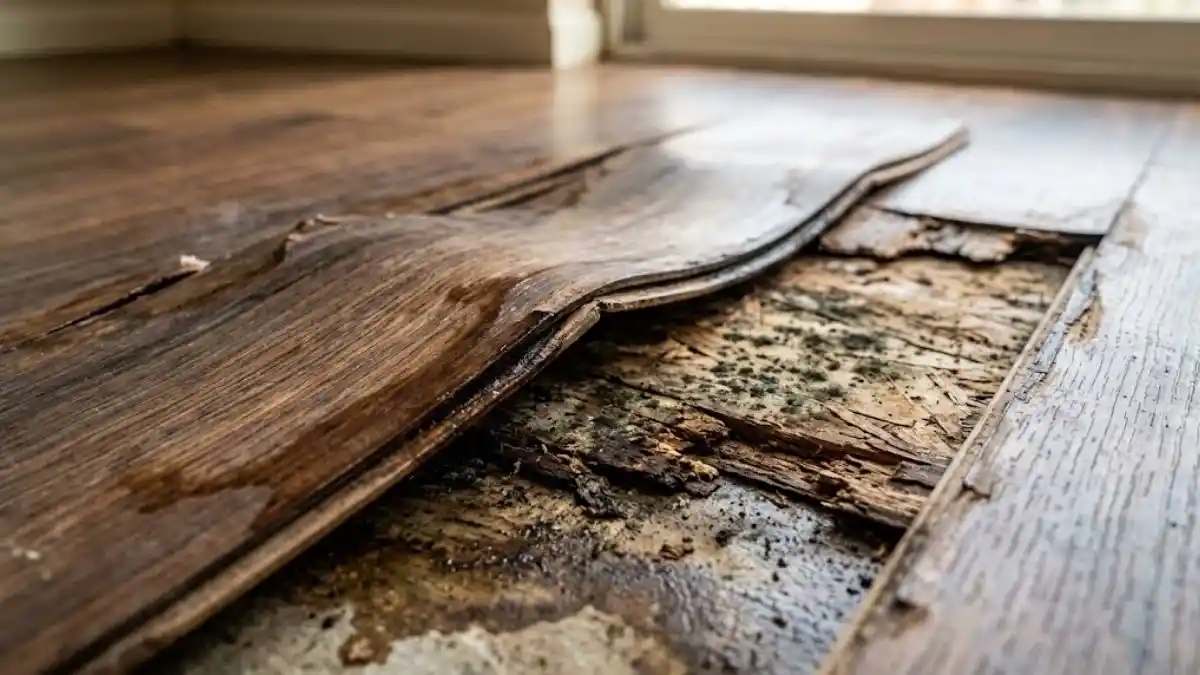
Hardwood tends to show water damage through a process called cupping, where the edges of each board rise slightly higher than the center, giving the floor a subtle wavy texture you can feel more than see at first. In more advanced cases, boards start to separate from each other, leaving visible gaps that weren't there before. Discoloration, especially a darkening near seams or along a wall, is another early sign worth taking seriously.
Laminate behaves differently than solid hardwood because it's made of composite layers that don't handle prolonged moisture well at all. Swelling along seams, a soft or spongy feel underfoot, and visible bubbling on the surface are the most common signs. Unlike hardwood, laminate that's absorbed significant water usually can't be dried and saved. The composite core swells permanently once it's taken on enough moisture.
Flooring sits directly on top of a subfloor, and once moisture gets past the flooring material itself, it's working on the subfloor and potentially the floor joists underneath. Subfloor that stays wet for an extended period is far more likely to need full replacement than flooring caught and dried early, which is really the core reason catching this early matters more than the cosmetic issue of a slightly uneven floor.
If you're noticing any of these signs, our water removal team can assess whether the flooring itself and the subfloor beneath it are salvageable. Our carpet water damage service covers the same kind of assessment for carpeted rooms specifically, where the padding underneath often tells a different story than the carpet on top.
We see this pattern regularly across our service area, from older homes in Peachtree City's established neighborhoods to newer construction in Fayetteville. The earlier it's caught, the smaller the eventual repair tends to be.
Luxury vinyl plank, increasingly common in newer construction and remodels throughout Peachtree City's villages, has a reputation for being more water-resistant than hardwood or laminate. The flooring itself often is. But that resistance can actually work against early detection: water that gets underneath a vinyl plank floor through a seam or edge can sit trapped for weeks, feeding mold growth in the subfloor while the visible flooring shows no warping or staining at all.
If you have vinyl plank flooring and notice a musty smell without any visible flooring damage, that's actually a more concerning sign than visible warping would be. This is because it suggests water has already been trapped underneath long enough to develop an odor.