Homeowner Resource
Why Does My Basement Smell Musty In Summer But Not Winter?
☎ (678) 940-0638
24/7 dispatch if you need help right now
This is a pattern we hear about constantly, and it's actually a useful clue rather than a confusing coincidence. If your basement smells musty specifically during the summer months and clears up once cooler weather arrives, that seasonal pattern points toward a specific, common cause: condensation, not a leak.
Basement walls and floors, being below grade, stay relatively cool compared to the outside air, especially during Georgia's hot, humid summers. When warm, moisture-laden outside air meets those cooler surfaces, condensation forms, the same basic process that fogs up a cold glass of iced tea on a summer afternoon. That condensation moisture is enough to feed mold growth and produce the musty smell, all without any actual water leak involved.
Cooler, drier winter air holds far less moisture to begin with, which means the temperature difference between the basement surfaces and the outside air doesn't produce the same condensation effect. Less ambient moisture means less feeding a musty smell. This is why the same basement that seems fine all winter can develop that familiar smell again once summer humidity returns.
A leak-driven musty smell tends to be more consistent year-round, or tied to specific weather events like heavy rain, rather than following the broader seasonal humidity pattern. If your basement smell only shows up during or right after a rainstorm regardless of season, that points more toward an active water intrusion source than condensation. The seasonal, summer-specific pattern is a much stronger signal of condensation as the root cause.
If the smell has been present for more than a season or two, or if you can see any visible growth alongside it, a dehumidifier alone isn't going to solve an existing problem. It only helps prevent it from getting worse. At that point, proper remediation is worth doing rather than just managing the symptom every summer.
Our basement mold removal service addresses existing condensation-driven growth directly. Our mold inspection team can confirm whether what you're smelling is condensation-related or has another source feeding it that a dehumidifier alone won't fix.
This seasonal pattern shows up in basements across Peachtree City and throughout our humid subtropical service area every single summer, and recognizing it for what it is, usually condensation, not a hidden leak, helps homeowners know what kind of help to actually ask for.
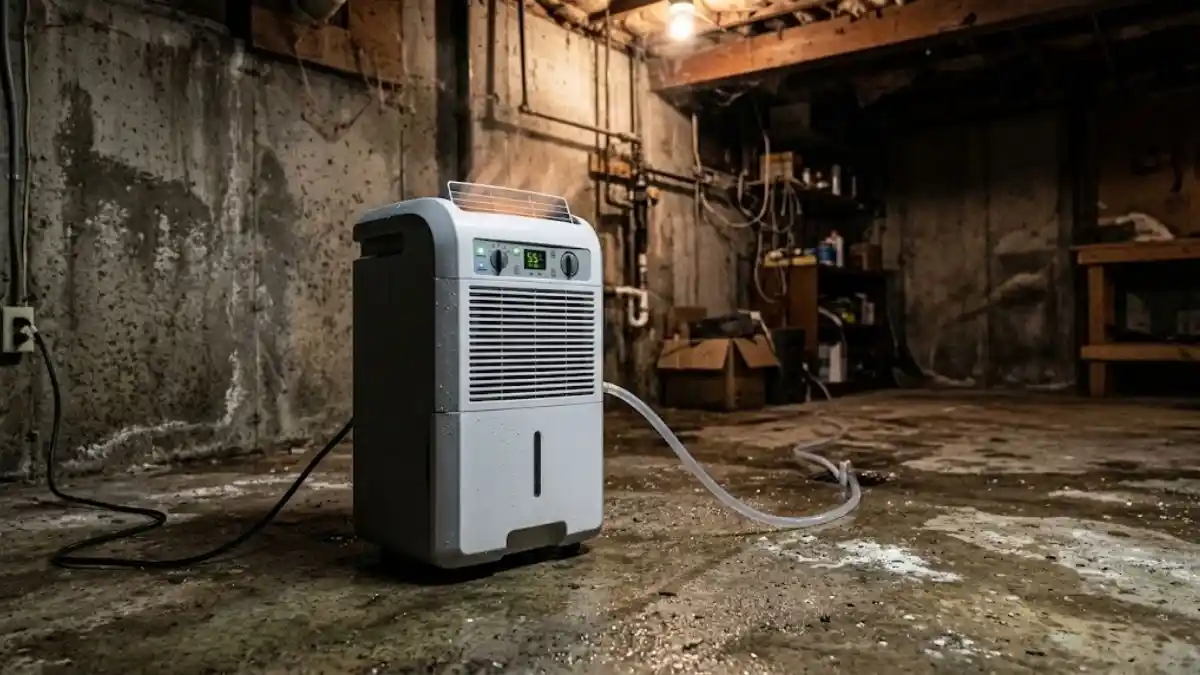
Most basement dehumidifiers let you set a target relative humidity, and 50 percent is the commonly recommended ceiling for preventing new mold growth in a below-grade space. Getting a basement consistently below that level in Peachtree City's summer humidity often takes a larger-capacity unit than what's sized for a single upstairs room. This is because a basement dehumidifier is fighting both the ambient outdoor humidity working its way in through the foundation and whatever moisture the space generates on its own.
If you've been running a dehumidifier all summer and still seeing readings above 55 to 60 percent, that's usually a sign the unit is undersized for the space rather than a sign dehumidifiers don't work for your basement.