Homeowner Resource
The Hidden Risk Of Slow Roof Leaks After A Georgia Thunderstorm
☎ (678) 940-0638
24/7 dispatch if you need help right now
Georgia summers bring a predictable pattern of severe thunderstorms, often arriving fast, dropping heavy rain and strong wind gusts, and clearing out within an hour. That speed is part of why roof damage from these storms is easy to miss: the storm itself doesn't last long enough to make a leak dramatically obvious the way a sustained tropical system might.
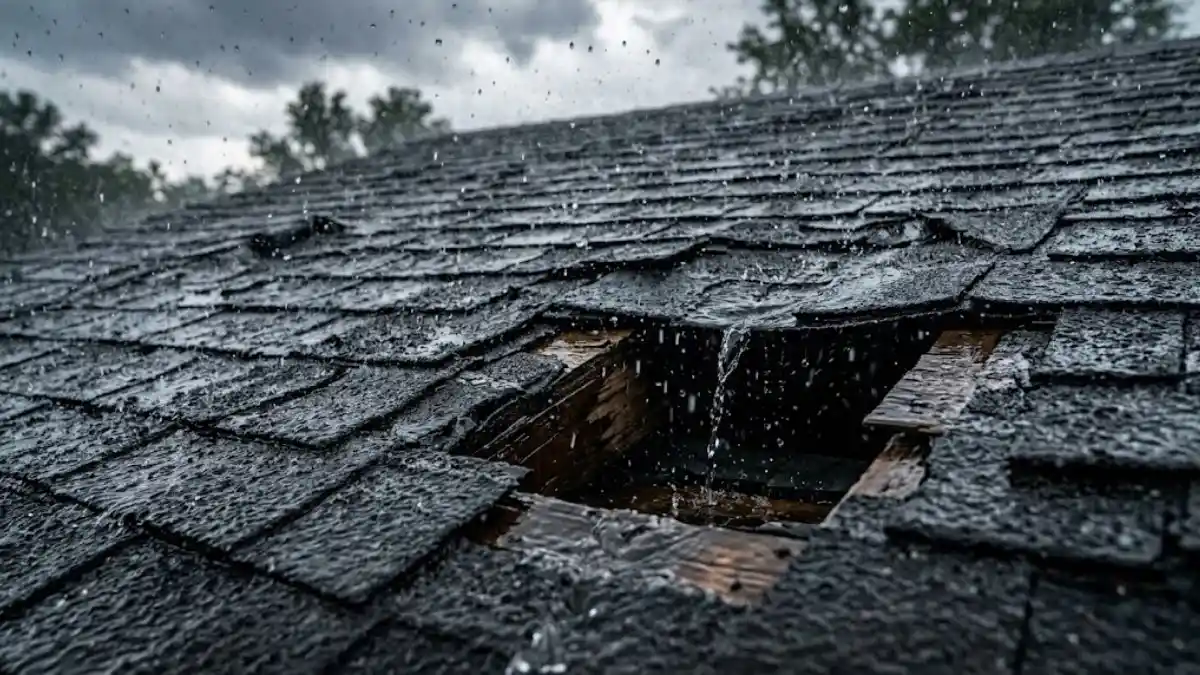
A wind gust strong enough to lift or crack a shingle doesn't necessarily let water pour through immediately. Instead, water often finds a small gap and slowly works its way into the roof decking and insulation over the course of several storms, weeks apart, before enough moisture accumulates to show up as a stain on your ceiling. By the time that stain appears, the leak has usually been active for longer than most homeowners assume.
A sudden, obvious leak gets addressed quickly because it's impossible to ignore. A slow leak does the opposite. It gives mold time to establish itself in damp insulation and framing before anyone even knows there's a problem. This is because the affected area stays consistently damp rather than getting a chance to dry between rain events.
Making a habit of a quick visual check after any significant storm — walking the exterior, glancing at ceilings, sniffing for anything musty in the attic — catches this pattern early, before a slow leak has weeks to work on your roof decking and insulation. It takes a few minutes and can be the difference between a small repair and a much larger one.
If you do notice a new stain or smell, our storm damage restoration team handles the water damage response. We coordinate with a roofing contractor for the actual repair so both sides of the problem get addressed together rather than as two disconnected projects. For leaks that have been running long enough to raise mold concerns, our mold inspection service can check whether the affected area needs more than just drying.
Severe thunderstorms are a routine part of the season across Peachtree City and throughout Fayette County. A five-minute post-storm habit is a small trade-off against the kind of damage a slow leak can cause if it goes unnoticed for a month or two.
A newer roof with intact shingles and proper flashing can usually withstand several storm seasons without developing a slow leak, but asphalt shingle roofs in Georgia's heat and humidity typically start showing wear after 15 to 20 years, well before they reach the end of their rated lifespan on paper. Once a roof passes that age, the same storm that wouldn't have caused an issue five years earlier can be enough to lift an already-brittle shingle edge.
If your home's roof is approaching or past that age range, it's worth being more proactive about post-storm checks specifically. This is because the margin for error shrinks considerably once shingles have lost some of their original flexibility and sealant strength.