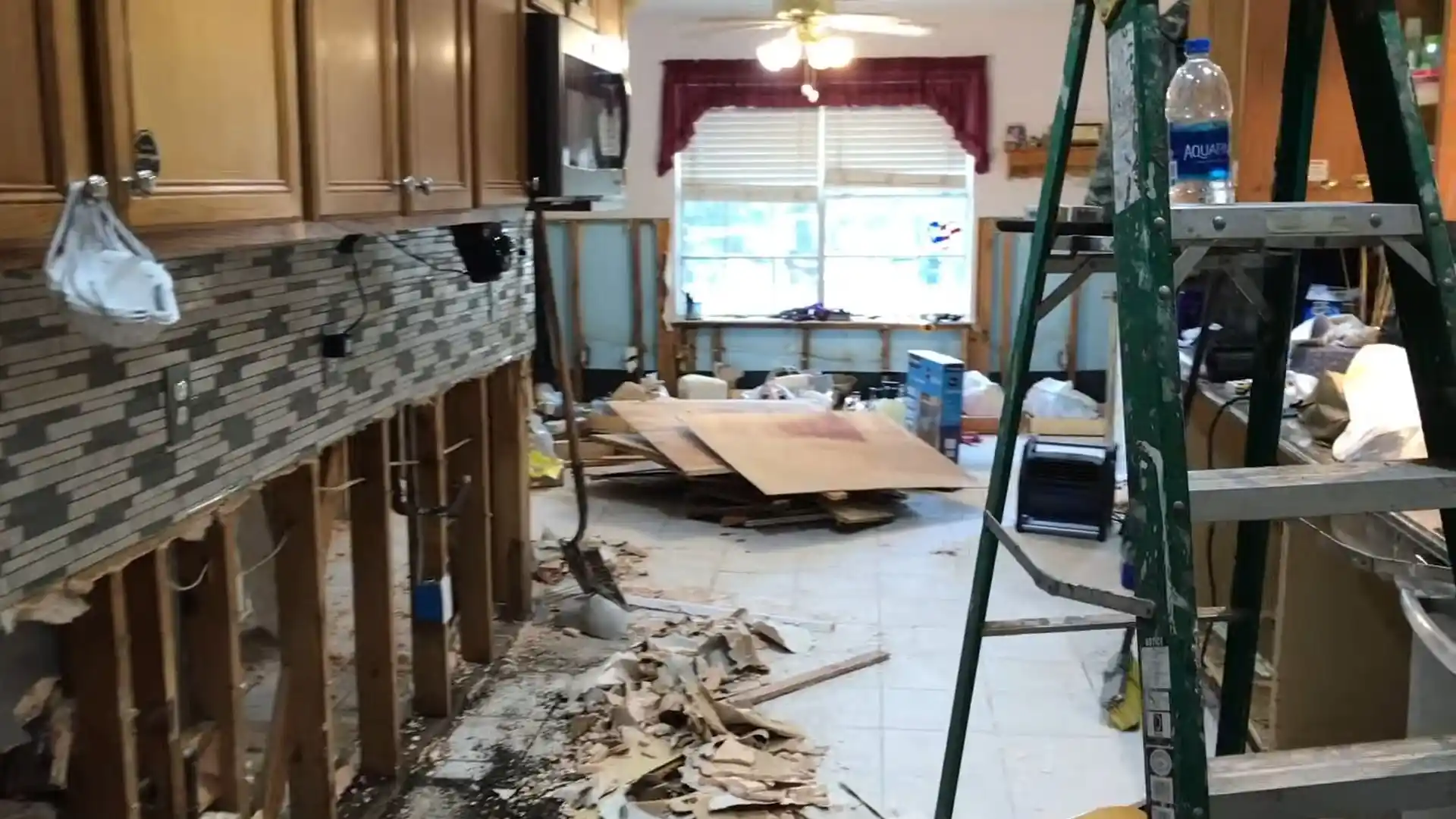
Debris, silt, and contaminated-water cleanup after a flood event, separate from the drying and structural restoration process.
Flood cleanup covers what happens once the bulk of the water is gone but the mess it left behind hasn't been addressed: silt, debris, and any contamination the flood water carried in from outside. This is distinct from the drying process, which focuses on moisture inside materials rather than what's sitting on top of surfaces.
Flood water rarely stays clean on its way into a home. It picks up soil, lawn chemicals, and whatever else it passes over outside. This means cleanup often involves proper sanitizing, not just wiping surfaces down. Skipping this step and moving straight to drying can trap contaminants against a surface that then gets sealed back up during repair.
Clearing out sediment and debris the flood water carried into the home.
Disinfecting surfaces that came into contact with contaminated flood water.
Removing materials too contaminated or damaged to salvage.
Debris volume and contamination level both swing the total, so we finalize cost with a written, itemized assessment once we've seen what's actually involved.
Flood water that's traveled across yards, streets, or storm drainage before entering a home carries more than visible mud. It picks up fertilizer and lawn chemical residue, bacteria from any storm drain or sewer overflow it crossed, and fine sediment that works its way into flooring seams and baseboards far past what a quick mop-up addresses. This is especially relevant for homes near Peachtree City's golf-cart path drainage corridors, where flood water has often crossed paved surfaces and landscaped areas before reaching a house.
Our cleanup process treats this sediment as contaminated material requiring proper disposal and surface sanitizing, not just debris to sweep up. This is part of why flood cleanup takes longer than the visible mess might suggest.
It's part of the same overall project, but it's a distinct step focused on debris, silt, and sanitizing rather than drying and structural repair.
Yes, in most cases. Flood water that traveled across yards or streets before entering a home usually picks up contaminants even if it doesn't look visibly dirty.
We assess each item's material and exposure. Non-porous items can often be sanitized and kept. Porous items exposed to contaminated water are usually recommended for disposal.